
Does a Crypto Wallet Reveal Your IP Address?
Your wallet address may be public, but your IP address lives at a different layer. Here's what crypto wallets can reveal, who may see your network information and how to reduce unnecessary exposure.
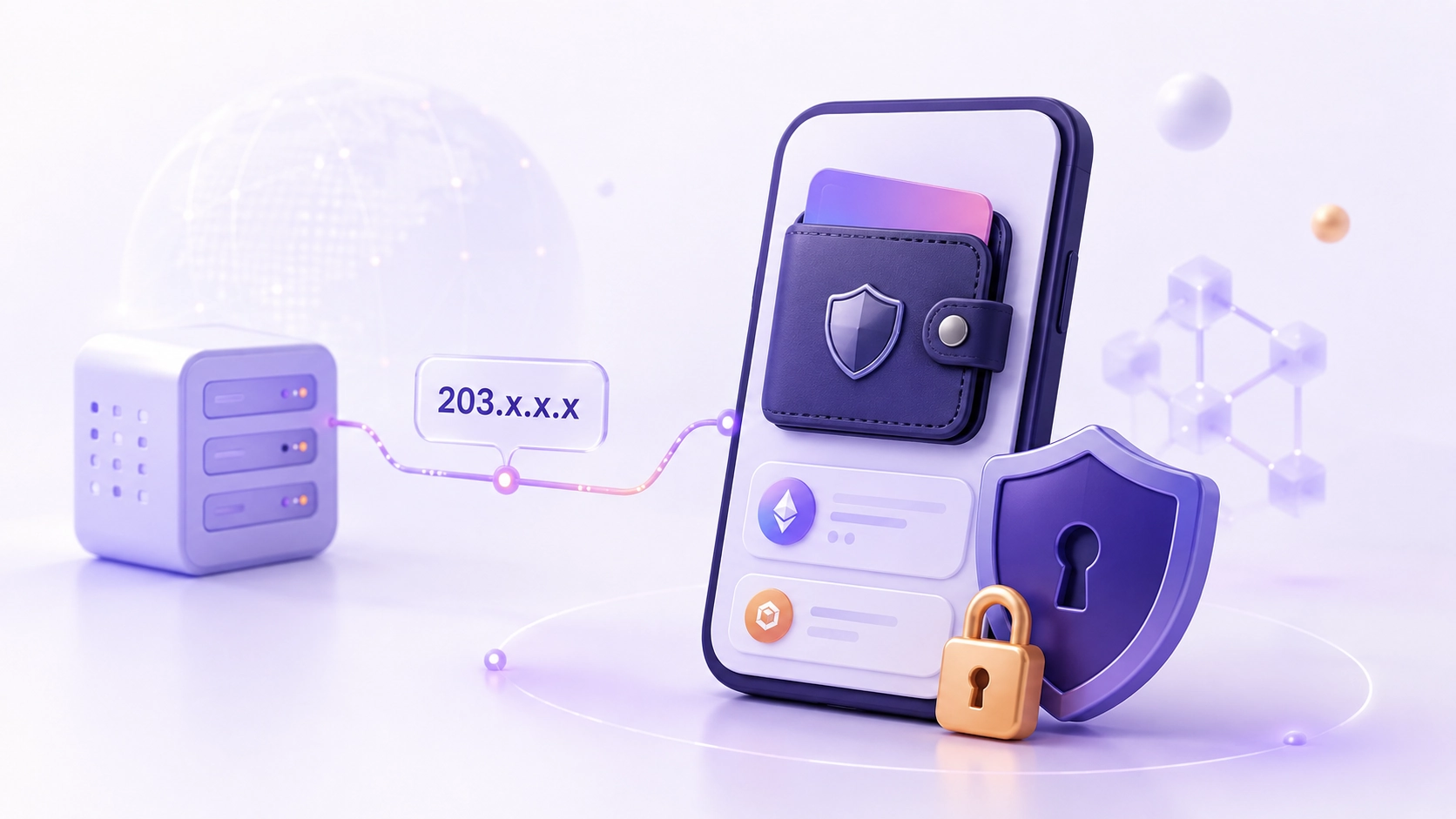
What you'll learn
- What a wallet address reveals
- What an IP address reveals
- How RPC providers can see network metadata
- Whether an IP address is stored on-chain
- What a VPN can and cannot hide
- Practical ways to improve wallet privacy
- Public blockchain identifier
- Can reveal transactions
- Can reveal balances
- Usually pseudonymous
- Network identifier
- Approximate location
- ISP information
- Not usually written on-chain
Crypto wallets are often described as private because they do not necessarily require your name, home address or traditional bank account details.
But that can create a misleading impression.
A crypto wallet may not directly display your IP address on the blockchain, yet the infrastructure around the wallet can still expose it. Your wallet may connect to remote servers, RPC providers, blockchain nodes, analytics tools, decentralized applications and other online services. Those services can potentially see the IP address used to make the connection.
That distinction matters.
Your wallet address and your IP address are two different pieces of information. One exists on the blockchain. The other belongs to the network connection you are using.
When those two pieces of data become linked, a supposedly pseudonymous wallet can become much easier to associate with a real person.
This guide explains how that happens, what different parties may be able to see and what practical steps can reduce unnecessary exposure.
The short answer
Yes, using a crypto wallet can expose your IP address to certain services, but your IP address is not normally written directly onto the blockchain.
The blockchain itself may publicly reveal:
- Your wallet address
- Transactions associated with that address
- Token balances
- Smart contracts you interact with
- Addresses you send funds to
- Addresses that send funds to you
Your IP address belongs to a different layer.
It may instead be visible to:
- Blockchain nodes
- RPC providers
- Wallet infrastructure providers
- Websites and dApps you connect to
- Analytics providers embedded in wallet software
- Your internet service provider
- Other network infrastructure
Ethereum's own documentation highlights this distinction. Blockchain activity can be public while off-chain metadata such as IP addresses and RPC-provider information can create additional privacy risks.
So the better question is not simply: does the blockchain publish my IP? It normally does not.
The more useful question is: can someone operating infrastructure around my wallet associate my IP address with my wallet activity? In some situations, yes.
What is your wallet address?
A crypto wallet address is a public identifier used to receive or interact with cryptocurrency.
Depending on the blockchain, it might look something like 0x742d... or a longer Bitcoin address.
Wallet addresses are often called pseudonymous rather than anonymous. That is because the blockchain does not necessarily contain your legal identity next to the address, but your activity can still be visible.
For example, Ethereum describes its blockchain as fundamentally public: addresses, balances, transactions and contract interactions can generally be inspected by anyone.
Bitcoin works similarly in this respect. Bitcoin.org notes that transactions are public and permanently recorded, and that addresses can accumulate a visible transaction history.
If someone eventually connects an address to you, they may be able to analyse much more of that address's history.
What is an IP address?
Your IP address identifies the internet connection being used to communicate with online services.
When you open a website or send a request to an online server, that service ordinarily needs networking information in order to send the response back. That means an online service you communicate with can often see the public IP address from which the request originated.
A crypto wallet may therefore protect your private keys without automatically protecting your network identity. These are separate security problems.
You can have excellent private-key security, full self-custody and a pseudonymous wallet address, and still expose network metadata.
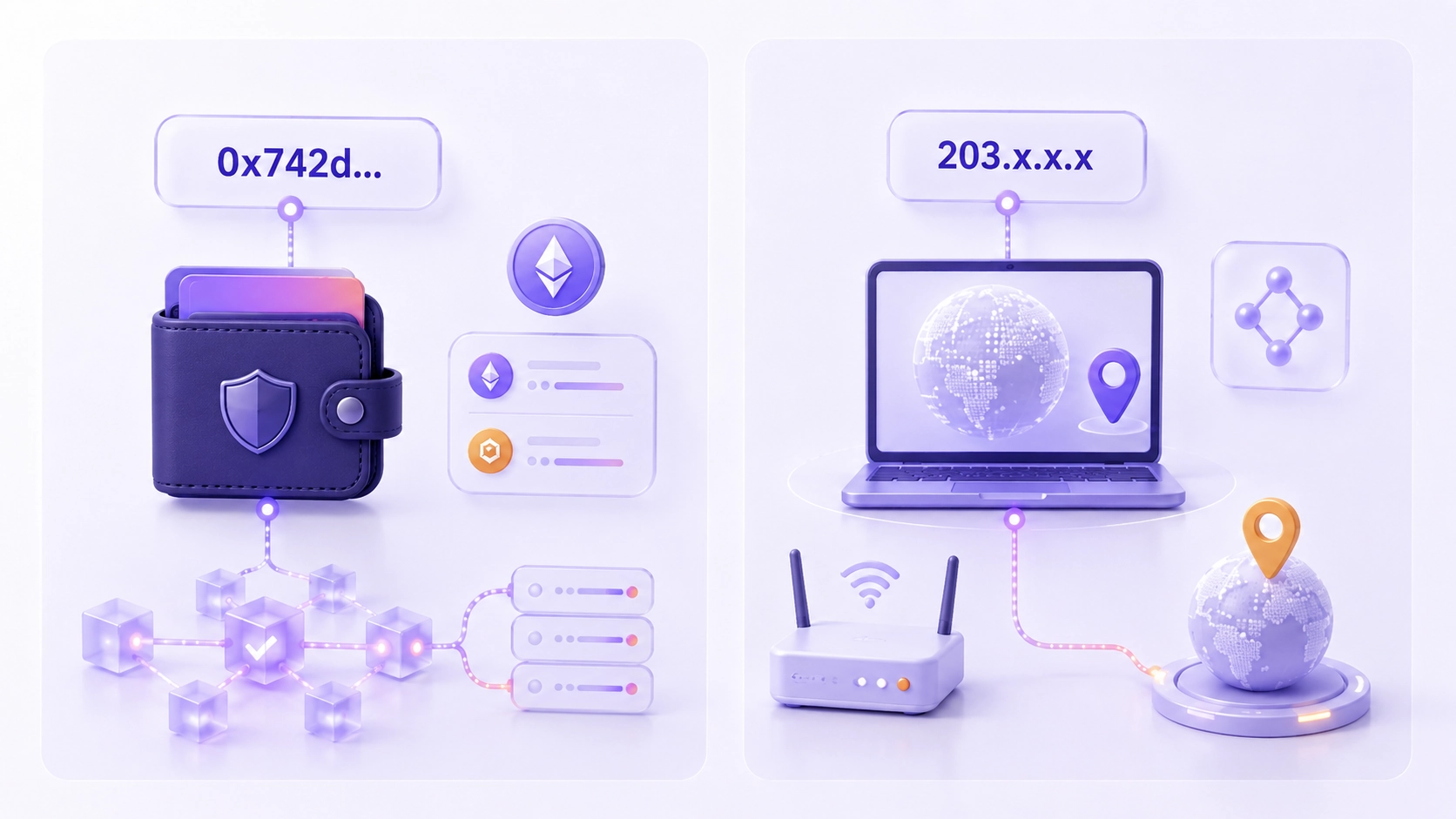
How can a crypto wallet expose your IP?
There are several possible pathways.
1. RPC providers
This is one of the most important. Many wallets do not independently store and verify an entire blockchain. Instead, they ask another server for information: what is the balance of this address, what transactions belong to this account, what is the current gas fee, send this transaction to the network.
For Ethereum-based networks, these requests are commonly made using JSON-RPC. Ethereum describes JSON-RPC as an interface used by applications to communicate with Ethereum clients.
Imagine your wallet asks an RPC provider for the balance of wallet address ABC. The provider may potentially receive two important pieces of information from the same interaction: the wallet address, and the network source - your IP address. That creates the possibility of associating the two.
Ethereum's own privacy discussion published in 2026 specifically warns that a default RPC provider can potentially see the addresses queried by a wallet together with network metadata such as the user's IP address.
This is one reason wallet privacy involves far more than simply keeping a seed phrase secure.
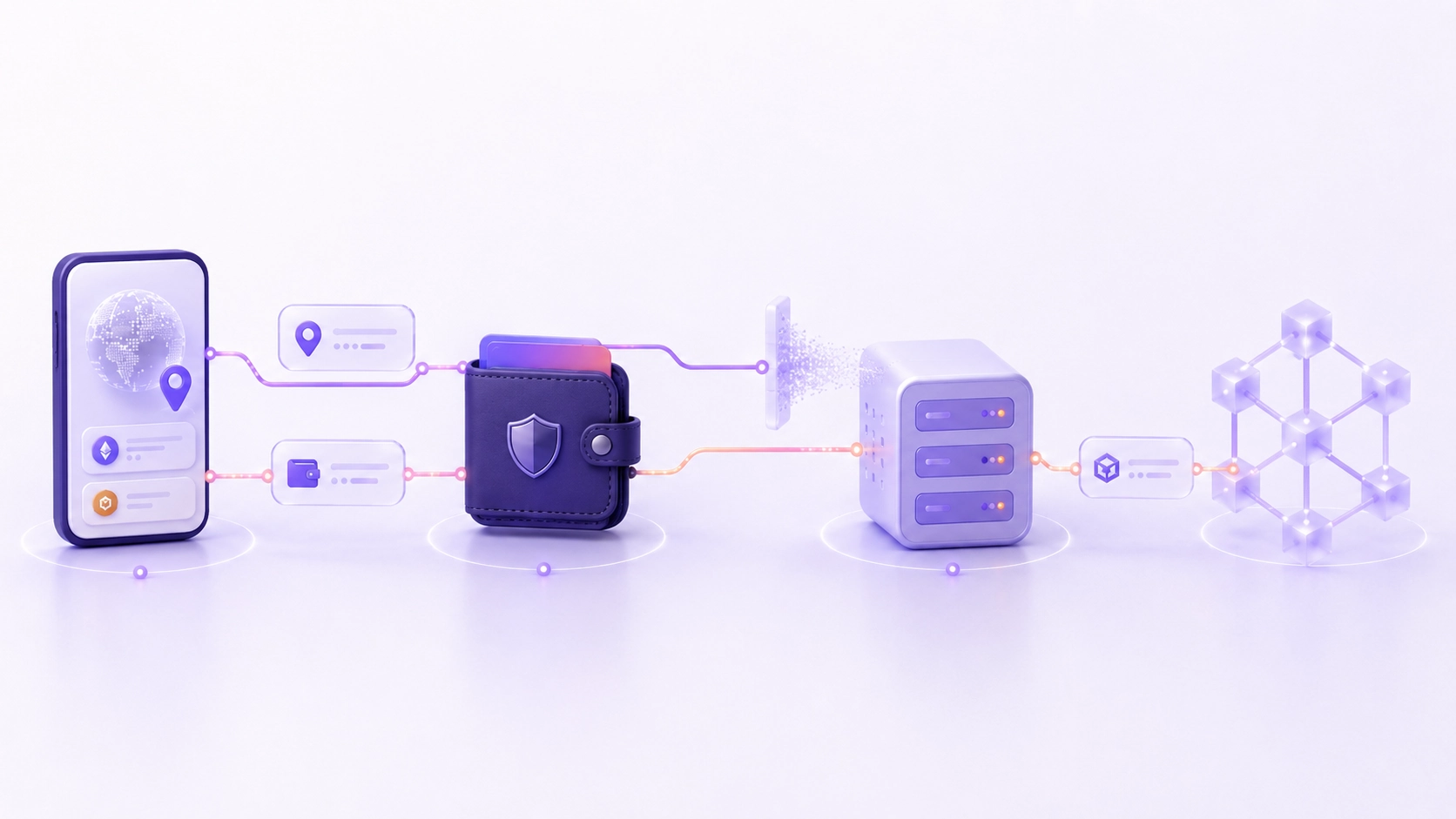
2. Broadcasting transactions
Transactions have to reach the blockchain network somehow. With some cryptocurrencies, a wallet or node can broadcast a transaction into a peer-to-peer network.
Bitcoin.org explicitly warns that because Bitcoin operates through a peer-to-peer network, network participants may observe transaction relays and log associated IP addresses. It also notes that identifying the true original source is not necessarily straightforward because nodes relay transactions belonging to other users as well.
Bitcoin Core has continued introducing network-level privacy improvements. Version 31.0, for example, added an option allowing certain transaction broadcasts to use Tor or I2P rather than ordinary peer connections, specifically to improve privacy around transaction origin.
That tells us something important: network privacy is a real consideration even when blockchain addresses themselves contain no IP address.
3. Wallet analytics and telemetry
Wallet applications are still software applications. Some may communicate with analytics platforms, crash-reporting services, marketing tools, security providers and infrastructure APIs. Those connections may expose network metadata independently of any blockchain transaction.
A July 2026 Ethereum Foundation article discussing wallet privacy argued that some wallets can contact multiple external services before a user even makes a transaction.
This does not mean every wallet behaves this way. Wallet implementations differ significantly. But it means that selecting a self-custody wallet alone does not automatically guarantee network privacy.
4. Decentralized applications
Connecting your wallet to a decentralized application introduces another party. A dApp may learn your active wallet address when you authorize the connection. Separately, the website hosting that dApp can generally receive ordinary web-request information, potentially including your network IP address.
Researchers have been examining how these different signals can be combined. A 2026 study analysing popular browser-extension cryptocurrency wallets found that wallet interactions can expose signals capable of linking addresses, browsing sessions and potentially users' on-chain activity.
Earlier academic research also found instances where wallet or dApp information was transmitted to third parties, highlighting the broader privacy risks created when Web3 applications interact with conventional web infrastructure.
Again, this does not mean that every dApp automatically knows everything about you. It means the boundary between blockchain identity and ordinary internet tracking is not always as clean as users assume.
Is your IP address stored on the blockchain?
Usually, no.
A normal blockchain transaction contains information such as sender, receiver, amount, transaction fee, smart-contract data and cryptographic signatures. It does not typically contain a field saying User IP: 203.x.x.x.
Once a transaction has propagated through the network, blockchain explorers generally show blockchain information, not the IP address from which the transaction was originally submitted. This is why simply looking at someone's Ethereum address does not normally reveal their home IP address.
But there is an important caveat. The infrastructure that received the transaction before it reached the blockchain may have observed additional metadata.
That distinction is central to wallet privacy. On-chain information is publicly recorded by the blockchain. Off-chain metadata is generated while your wallet communicates with servers, websites and network infrastructure. The second category is where IP exposure generally occurs.
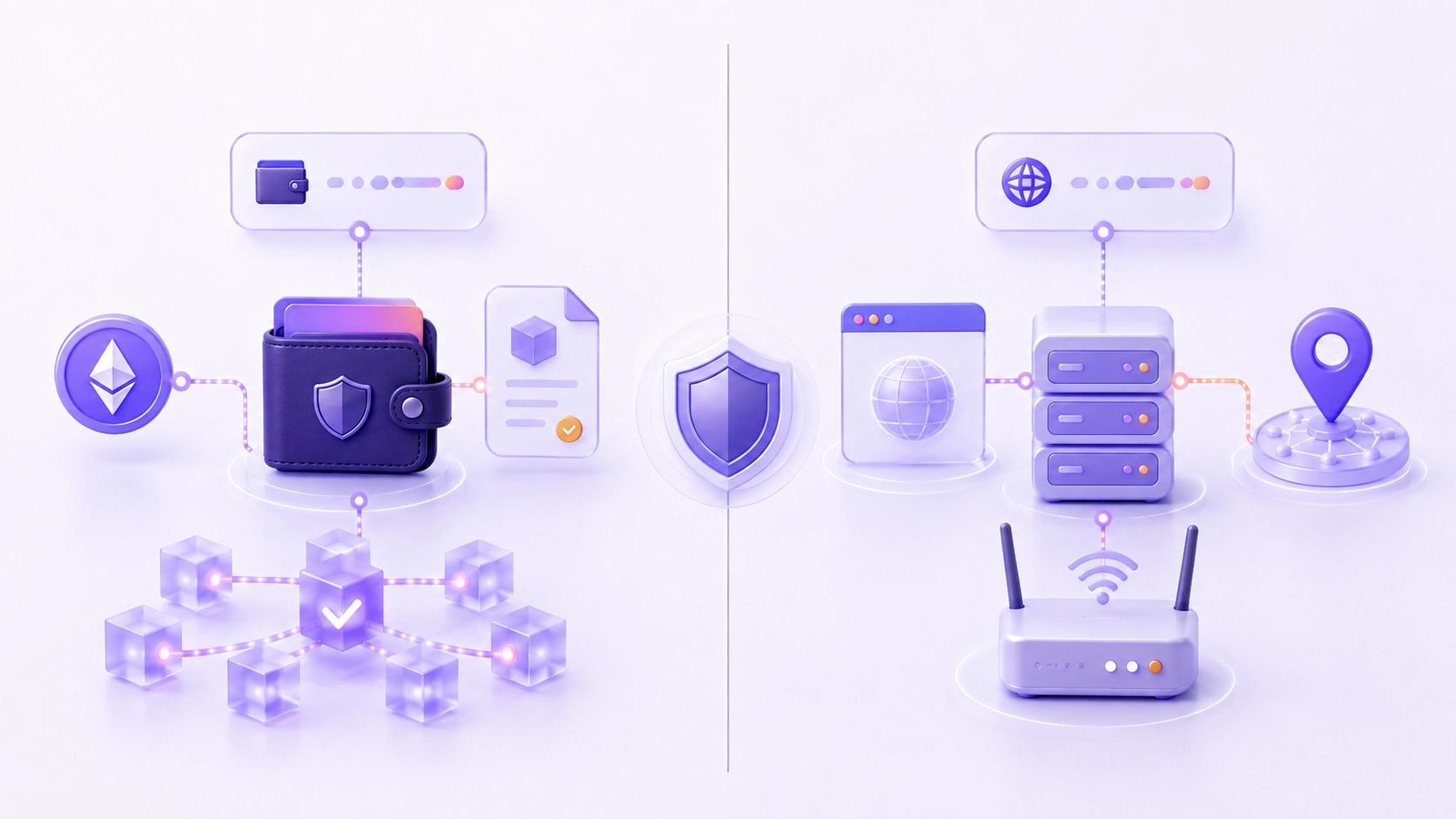
Can someone find your physical address from your IP?
An IP address does not normally reveal your exact house or apartment. It can, however, provide information such as approximate geographic region, country, city or surrounding area, internet service provider and network organisation.
More precise subscriber identification generally requires access to records held by the internet provider or other identifying information.
The privacy concern therefore isn't simply that someone sees your IP and instantly knows your front door. The concern is correlation.
Suppose a service possesses your IP address, your wallet addresses, request timestamps, browser identifiers and account information. Separately, each piece may reveal relatively little. Together, they can create a much stronger profile.
Can an exchange connect your wallet to you?
Potentially, yes.
Centralized cryptocurrency exchanges often have very different privacy characteristics from self-custody wallets. If you create an account with an exchange that conducts identity verification, the company may already possess information connected to your account.
If you then withdraw cryptocurrency to a self-custody wallet, there may be a visible on-chain transfer between the exchange and that address. The wallet address itself does not suddenly display your name publicly, but the exchange may know which account requested the withdrawal.
This is one example of how pseudonymous blockchain information can potentially become associated with real-world identity. IP-address privacy is therefore only one part of a larger picture.
Can your ISP see your crypto wallet?
Your internet service provider can generally observe that your internet connection is communicating with external servers. Encryption such as HTTPS can prevent an ISP from reading much of the actual content exchanged with a service, but the provider may still be able to observe networking metadata.
Exactly what is visible depends on the wallet, the protocol, DNS configuration, whether traffic is encrypted, whether a VPN or another privacy network is being used, and which servers the wallet contacts.
An ISP generally cannot simply open your encrypted wallet and read your private keys. Private keys should remain locally protected. But private-key confidentiality and network privacy are not the same thing.
Does using a VPN hide your IP from a crypto wallet provider?
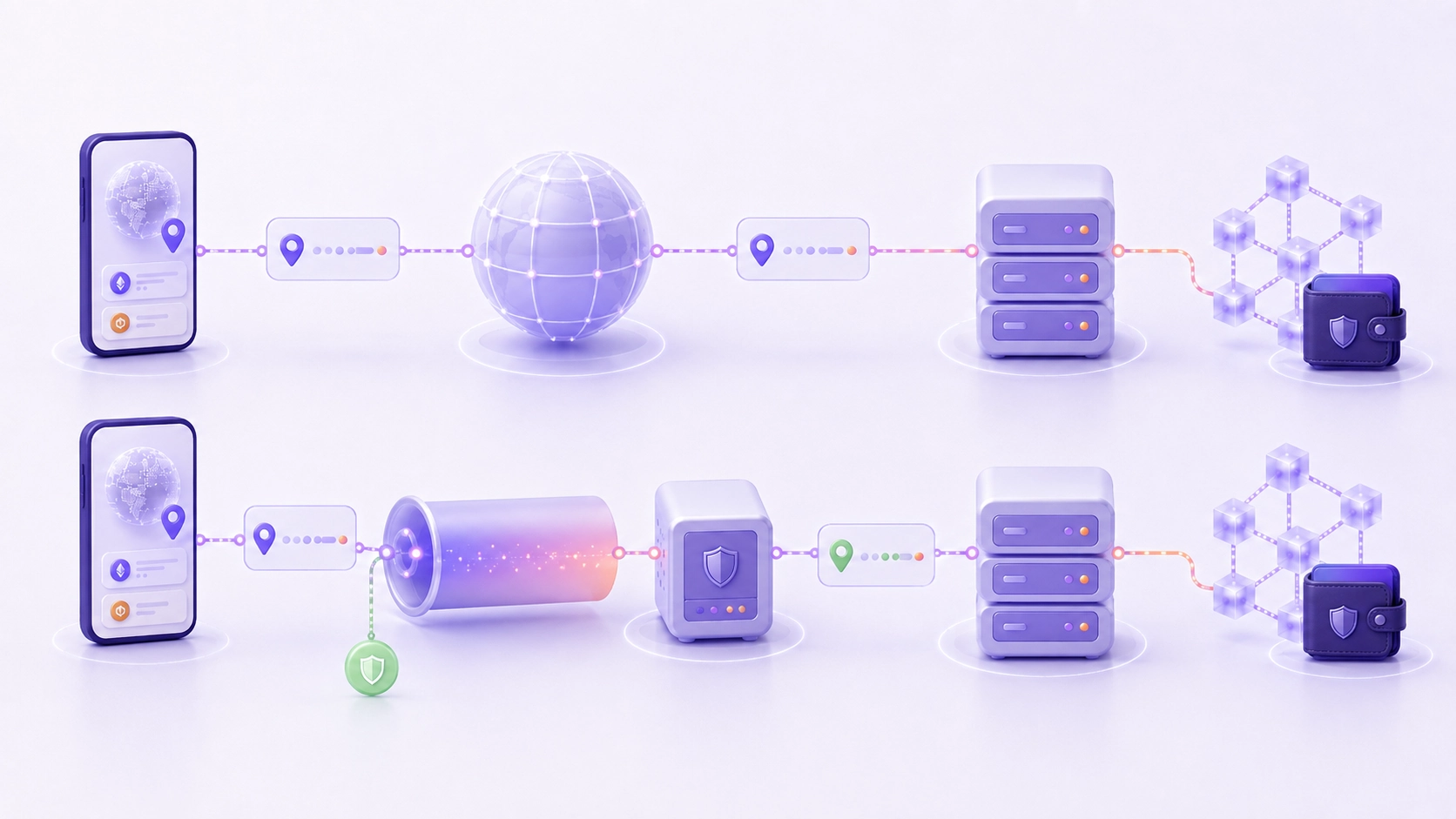
A VPN changes the network path between your device and internet services. Instead of connecting directly from your device to an RPC provider, the connection becomes device, then VPN server, then RPC provider.
The external service generally sees the VPN server's public IP rather than the original public IP assigned to your connection. That can reduce direct exposure of your home or mobile-network IP to RPC services, dApps, websites and other internet-facing infrastructure.
However, using a VPN does not make blockchain transactions anonymous. This distinction is extremely important.
A VPN does not hide public wallet balances, public transactions, smart-contract activity, addresses you connect to dApps, or blockchain relationships between addresses.
Think of a VPN as protecting the network layer, not rewriting the blockchain.
A VPN does not solve wallet privacy by itself
Suppose you use a VPN but repeatedly use the same Ethereum address everywhere. You connect it to dozens of dApps, post it publicly, receive money from an identity-verified exchange, use it as your ENS identity and send money to friends.
Your IP may be better protected, but your wallet still has an extensive public history.
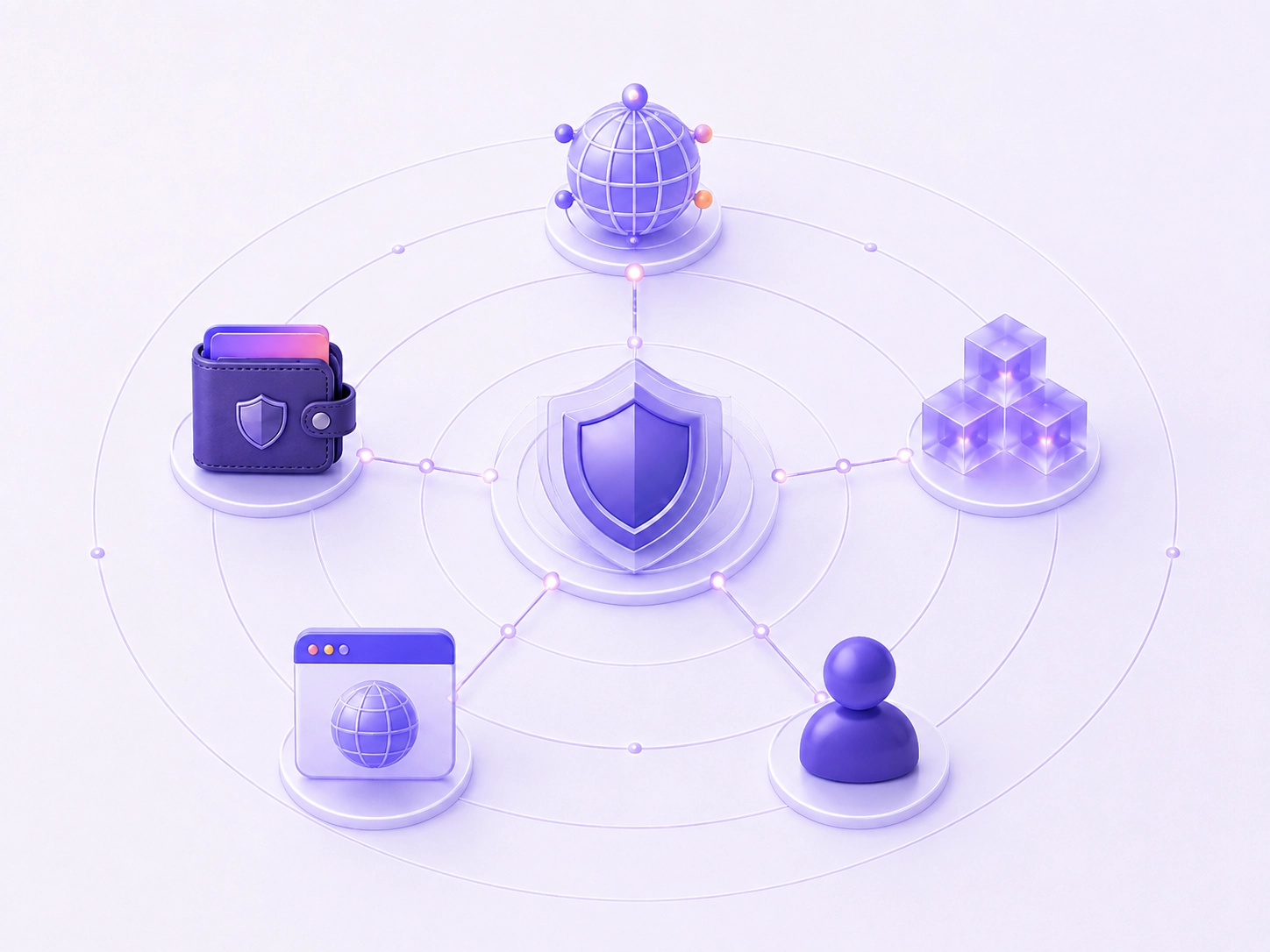
Blockchain privacy therefore requires thinking about several layers. Network privacy: who can see where your internet traffic originates? Wallet privacy: what information does the wallet itself share? Blockchain privacy: what does the public ledger reveal? Application privacy: what does the dApp or website learn? Identity privacy: can any of those signals ultimately be connected to your real identity?
Good privacy requires considering all of them.
Browser-extension wallets introduce additional considerations
Browser wallets are convenient because they allow websites to communicate directly with your wallet. But convenience creates another privacy surface.
A recent 2026 research paper studying 85 popular Chrome wallet extensions identified multiple privacy issues associated with wallet and browser interactions, including ways wallet addresses could potentially be linked across sessions or websites.
The researchers' broader conclusion is worth understanding: a wallet can protect your private keys while still leaking metadata.
Security and privacy overlap, but they are not identical. A wallet can be extremely secure against theft while still revealing more information than a privacy-conscious user would prefer.
How can you improve crypto wallet privacy?
There is no single switch that makes a public blockchain anonymous, but several practices can reduce unnecessary exposure.
Use a reputable wallet
Understand how the wallet handles analytics, RPC requests, address discovery, dApp permissions, telemetry and crash reporting. Privacy policies help, but technical architecture matters too.
Review wallet permissions
Disconnect dApps you no longer use. A wallet connection is not something that should necessarily remain active forever.
Avoid unnecessarily publishing addresses
Posting a wallet address alongside your real identity can establish a permanent connection. Bitcoin's own privacy guidance recommends caution when publishing addresses because transaction histories remain public.
Understand address reuse
Depending on the blockchain and wallet architecture, repeatedly using the same address can make activity easier to correlate. Different blockchains handle address management differently, so avoid assuming a practice appropriate for Bitcoin works identically on Ethereum.
Protect your network connection
A VPN can prevent ordinary internet services from directly seeing the public IP address assigned to your home or mobile network. For some advanced setups, Tor or other privacy-routing technologies may also be relevant.
Be careful with wallet-connected websites
A trustworthy wallet cannot fully protect you from every website you voluntarily authorize. Always check the domain, permissions requested, transaction details, signatures and wallet connection status.
What about Senton VPN and crypto wallets?
This is where network privacy and wallet privacy naturally meet.
When someone accesses wallet infrastructure without additional network protection, online services may potentially see their ordinary public IP address. Connecting through Senton VPN changes that network layer so external services ordinarily interact with the VPN server's IP instead.
Features such as a kill switch can also matter in this context because they are designed to prevent traffic from accidentally falling back to the ordinary internet connection if the VPN tunnel drops.
But it is important not to overstate what that achieves. Senton VPN does not make blockchain activity invisible. Your public blockchain transactions remain public. The VPN instead helps reduce exposure of the network identity associated with the connection. That is one piece of a broader privacy strategy.
Crypto wallets are pseudonymous, not automatically private
The idea that cryptocurrency wallets provide automatic anonymity comes largely from misunderstanding what a blockchain address represents.
A wallet address may not contain your name. That does not mean no information exists around it.
A modern wallet sits at the intersection of public blockchains, web browsers, RPC servers, dApps, internet infrastructure and analytics systems. Every one of those layers can generate metadata.
Ethereum's recent privacy guidance makes essentially the same point: even sophisticated on-chain privacy mechanisms can be weakened when users make requests from the same IP address, RPC provider or browser session.
Privacy therefore depends on the entire path, not just the blockchain.
Final answer: does a crypto wallet reveal your IP address?
A crypto wallet does not normally publish your IP address on the blockchain, but services your wallet communicates with may be able to see it.
That may include RPC providers, blockchain nodes, dApps, wallet infrastructure, analytics providers and other internet-facing services. Whether those parties store or associate your IP with wallet addresses depends on their architecture and privacy practices.
Using a VPN can reduce exposure of your ordinary public IP to these services, but it cannot erase the public history of a blockchain address or make cryptocurrency transactions inherently anonymous.
The better way to think about wallet privacy is therefore: protect the keys, protect the network connection, minimise metadata and understand what the blockchain itself makes public. All four matter.
- 1DeviceOriginal IP
- 2WalletAddresses and requests
- 3RPC providerMay see IP + queried wallet address
- 4BlockchainWallet address + transaction data
Frequently asked questions
Normally, no. Knowing a public wallet address does not automatically reveal the owner's IP address. A service that observed both wallet activity and network connections, however, may potentially be able to associate them.
Like other internet-connected wallets, MetaMask communicates with external infrastructure. Some optional features also involve requests to external services; MetaMask's own support documentation notes, for example, that certain security checks can expose the user's IP address to the service being queried unless network privacy tools are used.
No. A VPN can conceal your ordinary public IP from many destination services, but blockchain transactions and wallet addresses remain visible according to the rules of the underlying blockchain.
Bitcoin's peer-to-peer architecture means transaction-relay observations can expose network information in some circumstances. Bitcoin.org warns that IP addresses can potentially be logged, although relay behaviour also makes determining the true source of a transaction non-trivial.
A hardware wallet is primarily designed to protect private keys. Network privacy depends heavily on the software, node or wallet interface through which the hardware wallet communicates with the blockchain. Hardware security alone does not automatically hide your IP address.
No. Senton VPN can protect the network connection and replace the public IP visible to many external services with a VPN server IP. It does not conceal wallet addresses or transactions recorded on a public blockchain.