
Internet Freedom in 2026: Why Privacy, Anonymity and Open Access Matter
The internet was supposed to make geography less important. Information could cross borders instantly, and anyone could read international news, publish ideas and explore without depending entirely on what was available locally.
That internet still exists. But it is becoming more controlled: sites blocked, services throttled, connectivity cut during protests, identity checks spreading, and surveillance growing more capable every year.
What you'll learn in this article
- What internet freedom actually means
- How sites and services get blocked
- Where a VPN helps, and where it stops
- Why an IP is only one layer of identity
- How the layers fit together
Governments block websites and applications. Networks throttle services. Authorities shut down connectivity during protests and conflicts. Identity requirements are expanding. Surveillance is growing more capable, and information itself can increasingly be manipulated rather than simply removed.
Freedom House's latest Freedom on the Net report found that global internet freedom declined for the fifteenth consecutive year. Conditions worsened in 28 of the 72 countries it assessed, while 17 recorded overall gains. Freedom House also describes online anonymity as an important enabler of free expression that is under growing pressure as identity-verification requirements spread.
Access Now documented another record in 2025: at least 313 internet shutdowns across 52 countries, topping the 304 recorded in 2024.
Internet freedom, then, is no longer only about whether a website loads. It is about whether people can reach information, communicate privately, protect their identity and decide how much of themselves they reveal in order to take part.
The internet freedom we once knew is shrinking.
Protecting it starts with privacy.
What does internet freedom really mean?
It does not mean every form of online activity must be unrestricted. Countries can legitimately regulate fraud, abuse and unlawful content.
The more fundamental question is whether people can reach lawful information and communicate without arbitrary censorship, disproportionate surveillance or unnecessary exposure of who they are.
Freedom House evaluates internet freedom through obstacles to access, limits on content and violations of users' rights. That wider definition matters, because an internet can stay technically connected while being heavily restricted or monitored.
One person might reach most websites but not a particular news source. Another might have the whole web available and know that every visit can be tied back to their real name. A third might be required to identify themselves simply to participate.
Internet freedom therefore has several layers.
How websites and services get blocked
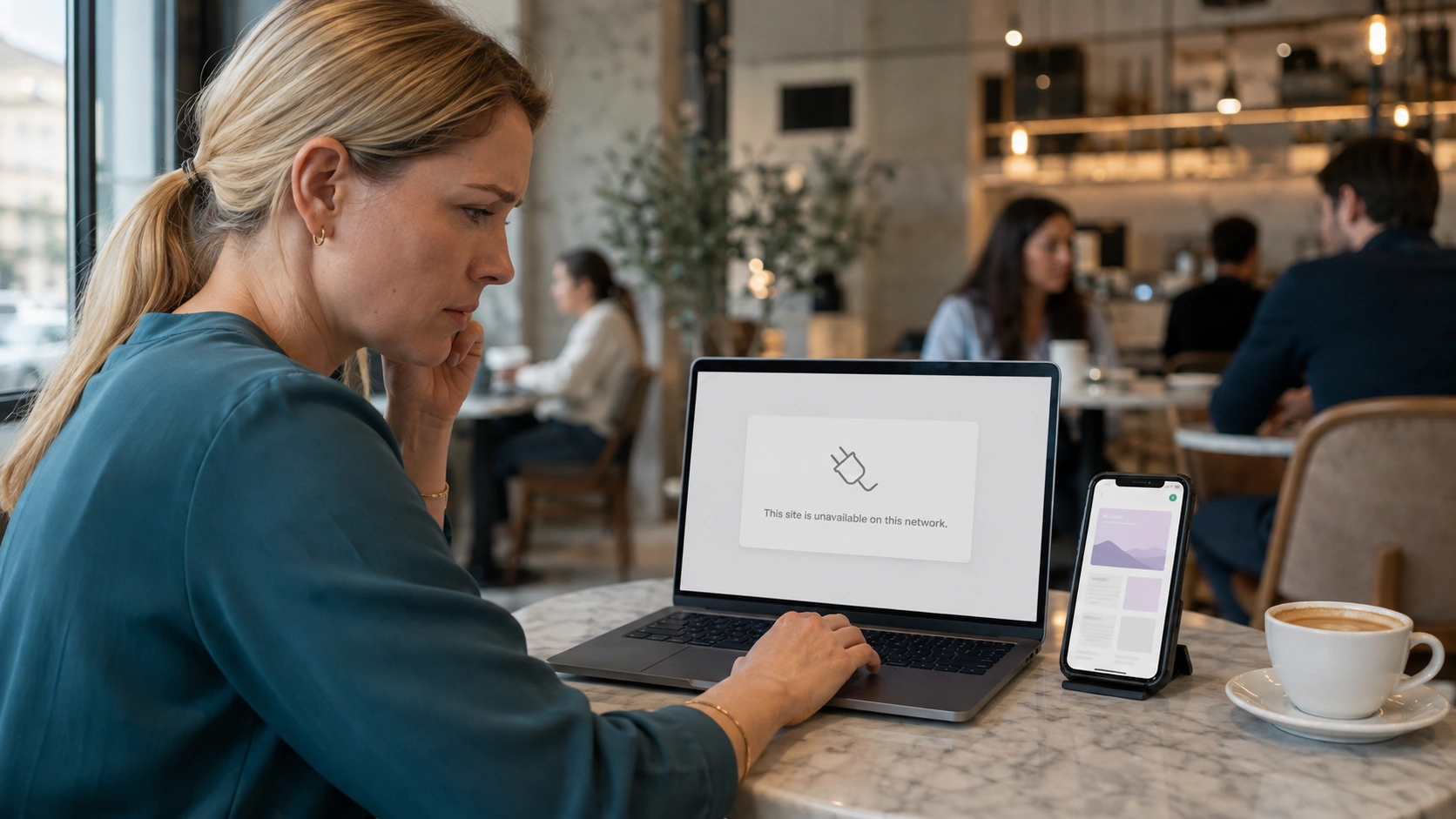
Censorship usually happens somewhere between the device and the destination. Governments, internet providers, employers, schools and network operators can all use filtering systems to block sites or services that would otherwise be available.
The Electronic Frontier Foundation explains that network filtering takes several forms, and that circumvention tools can route traffic around some of those blocks. VPNs are one of the technologies it lists for this.
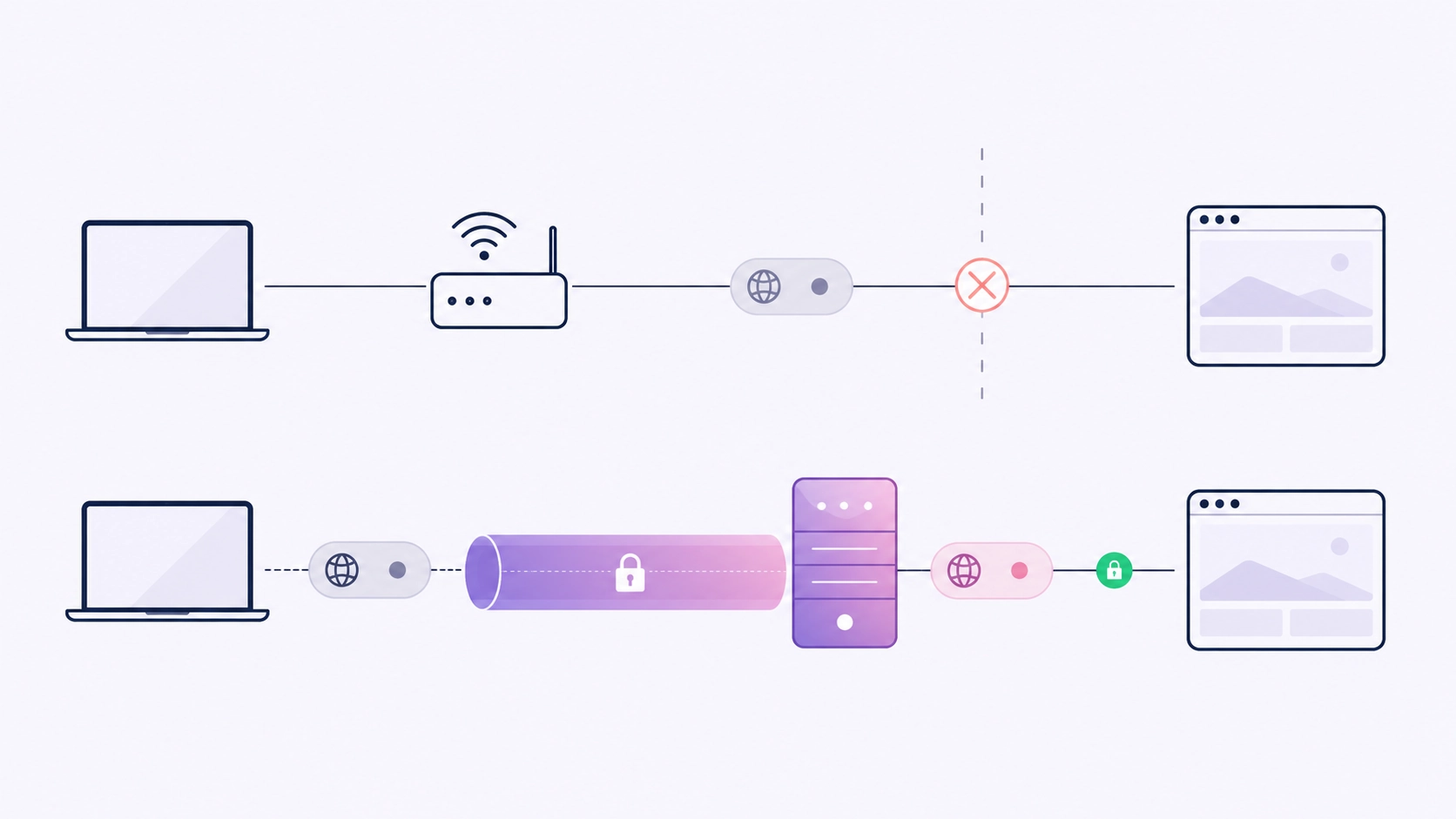
On an ordinary connection, traffic passes through the local network and the internet provider before reaching its destination. A VPN changes that route: the device first builds an encrypted connection to a VPN server, and traffic continues to its destination from there.
So a VPN can offer two things at once: privacy, and an alternative route to the open web.
Why VPNs matter for internet freedom
VPN technology is tied to internet freedom because so many restrictions operate at the network or geographic level.
The EFF notes that a VPN encrypts internet traffic and sends it through another server, potentially in another country, and that this can help against certain kinds of local or region-based IP blocking.
Senton VPN is built around this network layer. When you are connected, websites generally see the Senton VPN server's public IP rather than your ordinary one, and you can choose which supported location your traffic exits from.
That matters because the network someone happens to be sitting on should not decide what information they are allowed to reach.
Privacy is not only about your IP address
Changing the visible IP is useful, but online identity is made of much more than an IP.
You can hand over identifying information yourself, through a signup form. You might use your normal email address. You might reuse the same identity across unrelated sites. Cookies and browser characteristics can help sites recognise you when you return.
This is where Senton's privacy model goes past the VPN connection itself. Rather than treating anonymity as one switch, different features address different kinds of exposure.
Mask ID protects the identity you give to websites
Mask ID is the clearest example. It is designed to let you use a virtual identity in supported privacy workflows instead of handing over your real personal details.
A Mask Persona can supply alternate details such as a name, age and address, while Mask Email provides a temporary address for registrations, verification and casual communication. Senton can autofill those masked details for you.
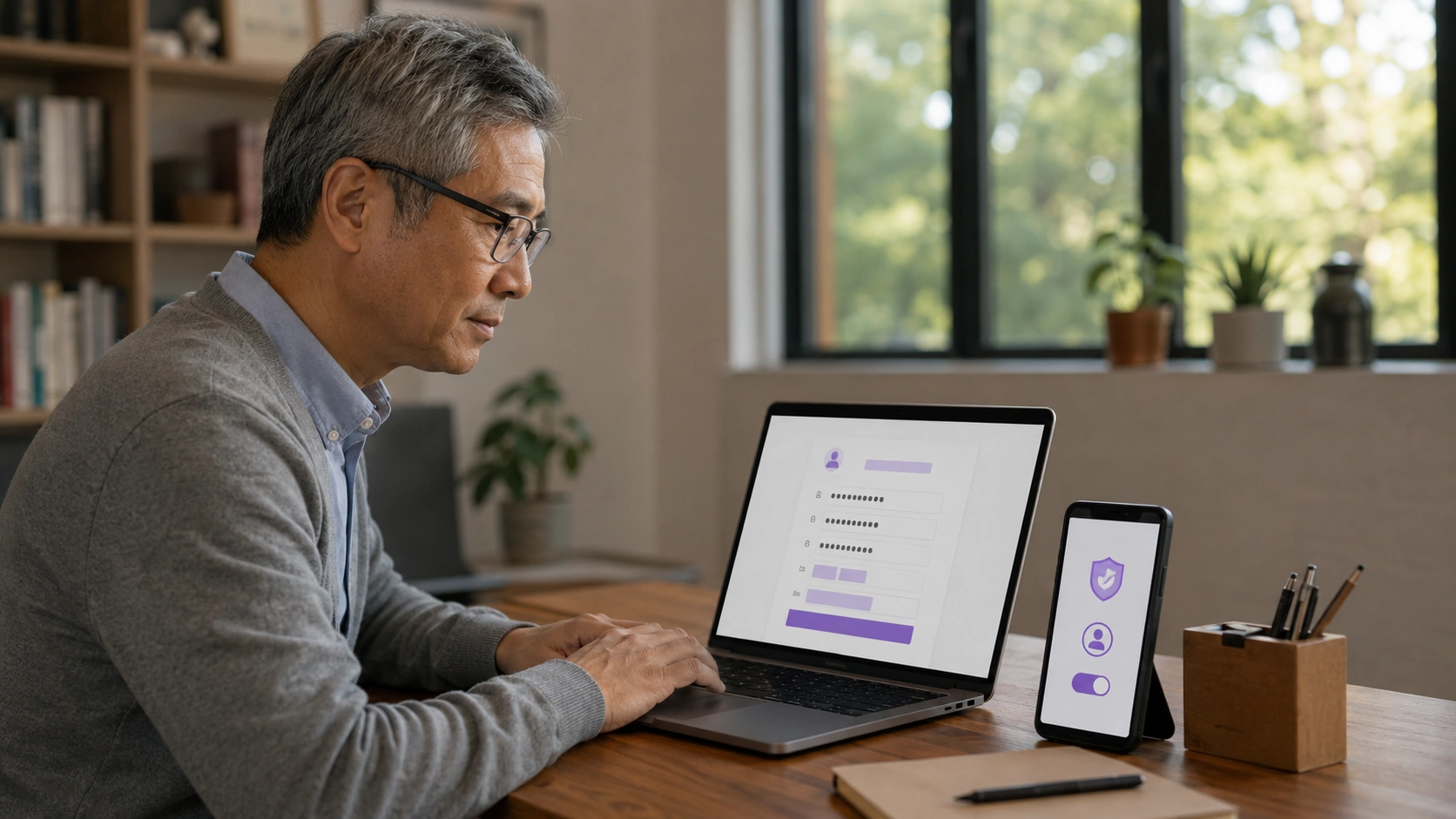
That solves a different problem from changing an IP. A VPN can stop a website seeing your ordinary public IP. Mask ID can stop you having to give that website your real identity in the first place, wherever alternate details are appropriate and permitted.
Instead of creating dozens of unrelated accounts under the same real name, email address and personal details, a supported workflow can use an alternate persona. Mask ID sits in the anonymity layer, not in the VPN connection settings.
- Name
- John Doe
- johndoe@email.com
- Address
- 123 Main St
- Age
- 28
- Name
- Alex
- alex@maskid.com
- Address
- 742 Evergreen Ave
- Age
- 28
Use Mask ID in supported workflows, and where the platform and the law permit it.
Anonymous signup starts with Senton itself
Privacy matters when the account is created, too.
Senton's pricing page describes Anonymous Signup as a privacy-focused registration process without unnecessary personal details.
That matters because protecting someone's browsing while demanding unnecessary real-world identity at signup would undercut the whole model. The approach is to keep that link as thin as possible from the start.
A no-logs VPN reduces the trail left behind
The next layer is what happens after you connect.
Senton's no-logs policy states that it does not retain browsing history, traffic destinations, DNS queries, connection timestamps or IP addresses as activity records. The VPN homepage says the same: no browsing history, no websites visited, no DNS requests, none of the content passing through the tunnel.
This is directly relevant to internet freedom. Private access is not only about reaching information. It is about reducing the lasting record that connects a person to what they went looking for.
That is why anonymity and no-logs architecture belong in the same conversation as getting around censorship.
IP Rotation adds another privacy layer
An ordinary VPN session may keep the same exit IP for as long as it lasts.
IP Rotation can change the VPN exit IP automatically at supported intervals, so one IP stays attached to a session for less time.
It should be read alongside Mask ID rather than confused with it. IP Rotation changes the network identifier. Mask ID changes the identity details you present.
Senton's own IP Rotation documentation is careful about this: rotating an IP does not by itself replace cookies, browser fingerprints, accounts you are logged into, or anything you have already submitted to a website.
That is not a hole in the system. It is the reason the system has more than one layer. Someone who wants stronger anonymity can reduce IP linking with the VPN and IP Rotation, while using Mask ID to avoid exposing real details during supported signups.
The planned Senton Browser is intended to cover another part of the picture, through fingerprint resistance, tracker blocking, per-site profiles, VPN integration and Tor integration. It has not launched.
Why the Kill Switch matters
Tools like these are only useful if they hold up when the connection does not.
If a VPN drops unexpectedly, an ordinary device will often carry on using its normal internet connection, exposing the real public IP and sending traffic outside the protected tunnel.
The Kill Switch is designed to stop that fallback. Where supported, it blocks internet traffic after an unexpected disconnection until the VPN reconnects or you change the setting.
That matters most in exactly the situation where someone chose a VPN because they did not want their ordinary connection exposed.
Different networks need different strategies
Restrictions are not implemented the same way everywhere. Some networks interfere with particular kinds of traffic; others block specific services outright.
Senton's support guidance therefore suggests changing your connection when a network causes trouble, including switching to a different server or location.
The wider principle is the point: circumvention technology has to be adaptable, because censorship technology is adaptable too. The EFF makes the same observation, noting that the most effective method depends on the kind of censorship you are up against.
Split tunnelling gives users more control
Internet freedom also means deciding how individual apps use the network.
Bypasser, Senton's split-tunnelling feature, lets selected apps or websites use the regular connection while everything else stays inside the VPN.
Senton's documentation points out that this helps when a particular site refuses VPN traffic: that one service can go direct without you having to switch protection off for everything else.
Privacy should not be an all-or-nothing networking decision.
Internet freedom and anonymity are converging
One of the biggest changes to the modern internet is the spread of identity requirements.
Freedom House specifically warns that online anonymity is under growing pressure as governments, in democracies and authoritarian states alike, introduce identity-verification requirements for particular sites and platforms.
Not every identity check is unjustified. Age verification, banking, regulated services and fraud prevention can all involve legitimate requirements.
But those cases should not become the excuse for making people expose their legal identity everywhere else.
That distinction is exactly where a tool like Mask ID belongs. For ordinary registrations, newsletters, one-off services and supported workflows where legal identity is unnecessary, people should have a way to stop scattering their real email address and personal details across the internet.
A multi-layer privacy problem
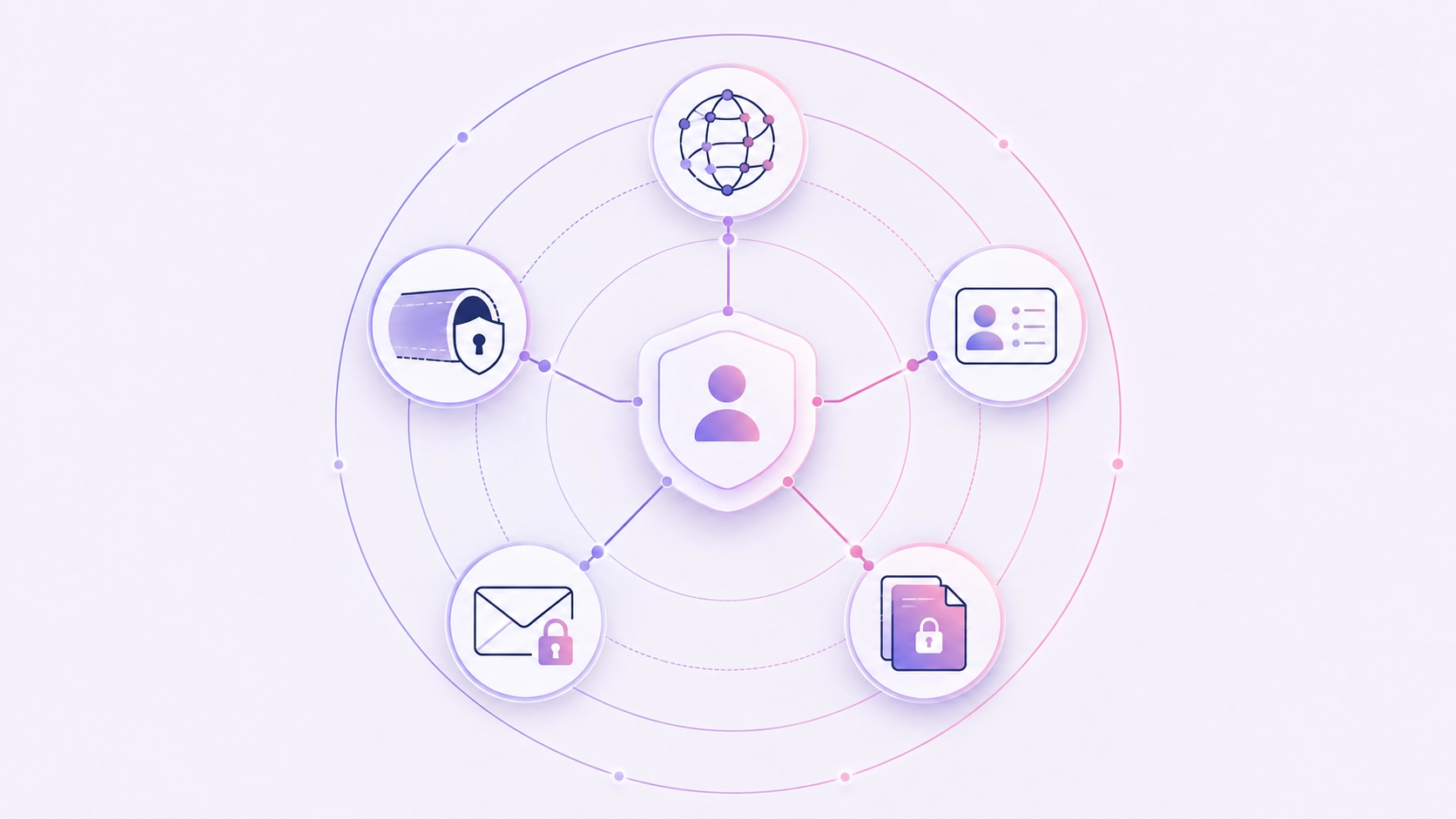
This is why treating a VPN as nothing more than an IP changer misses the bigger picture. Look at what each layer actually does.
The VPN protects and reroutes the network connection. No-logs architecture reduces the records kept. IP Rotation changes the exit IP over time. Mask ID replaces real signup details with alternate ones in supported workflows. SafeWeb deals with ads, trackers and known unsafe requests. The planned Senton Browser is designed to add fingerprint resistance, tracker blocking, isolated site profiles and Tor integration once it ships.
Each protects a different part of a person's digital identity. The goal stops being change my IP and becomes reduce how easily my activity can be connected back to me.
- Senton VPNEncrypts the connection and replaces the public IP sites see.
- Anonymous SignupKeeps unnecessary personal details out of the account itself.
- No-logs architectureLeaves no browsing record to connect back to you later.
- IP RotationStops one exit IP staying attached to a whole session.
- Mask IDReplaces the identity details you hand to a website.
- Senton BrowserComing soonPlanned: fingerprint resistance, per-site profiles, Tor integration.
That is a far more complete way to think about online privacy.
Where the wider Senton ecosystem fits
Senton describes itself around a simple principle: your digital life, private by default. The platform is being built around zero-knowledge design, user ownership of data, and privacy tools that work through a common Senton account.
Senton VPN covers internet access, network privacy and identity protection today. The rest of the ecosystem is planned to extend the same principles.
Senton Browser is planned around private browsing and fingerprint resistance. Senton Mail is planned as an end-to-end encrypted inbox that extends Mask ID with fresh aliases for registrations. Senton Pass is being designed around client-side encrypted storage, where your master password derives the vault key on your own device. None of the three has launched yet.
The idea is not that every Senton product does the same job. It is that different privacy problems need different protections.
What happens during a complete shutdown?
There is an important difference between censorship and losing connectivity altogether.
If a site is blocked on the normal route, circumvention technology such as a VPN can often find another path, depending on the method being used. The EFF lists VPNs among the techniques for reaching blocked sites and services.
But if connectivity is switched off entirely and the device has no path to any external server, an internet-based VPN cannot conjure a connection from nothing.
That distinction matters more every year, given Access Now's count of 313 shutdowns across 52 countries in 2025.
Internet freedom needs both: open connectivity, and privacy technology.
Senton's view
An open internet should let people reach lawful information without unnecessary barriers. But access on its own is not enough.

People should also be able to decide how much of themselves they expose while they explore. That includes their public IP address, the identity they use to sign up, their email address, the network records tied to their activity and, increasingly, the fingerprint their browser hands over.
Senton's approach is to protect those areas through separate but complementary layers, rather than one feature that claims to do everything.
Internet freedom is ultimately about more than loading a webpage. It is about being free to explore without unnecessarily revealing who you are. As the internet becomes more controlled, more monitored and more dependent on identity, that freedom only gets more valuable.
- The public IP sites see
- The route your traffic takes
- Where that traffic appears to exit
- Not what you type into a form
- The name, age and address you give
- The email address you register with
- What a signup form learns about you
- Not your network connection
Frequently asked questions
It generally refers to people's ability to reach information, communicate and take part online without arbitrary censorship, deliberate connectivity restrictions or unjustified violations of their rights. Freedom House assesses it through three lenses: obstacles to access, limits on content, and violations of user rights.
Often, yes. VPNs are a recognised circumvention tool because they encrypt traffic and route it through another server. The Electronic Frontier Foundation notes they can be useful against certain kinds of local or region-based IP blocking, though how well any method works depends on the type of censorship being used.
Mask ID is designed to reduce how much of your real identity you hand over in supported signup and privacy workflows. A Mask Persona can supply alternate details such as a name, age and address, and Mask Email provides a temporary address for registration, verification and casual mail, so your real address is not spread across the internet.
They protect different layers. The VPN replaces the public IP that sites see. IP Rotation changes that exit IP over time. Mask ID changes the identity details you type into a form. Senton's own IP Rotation documentation is clear that rotating an IP does not by itself alter cookies, browser fingerprints or accounts you are logged into, which is exactly why the protections are layered rather than bundled into one switch.
No. A VPN needs some underlying connectivity to reach its server in the first place. If authorities remove external connectivity altogether, a conventional VPN cannot create a connection from nothing. Where the internet is still reachable but filtered or blocked, that is where circumvention tools apply.